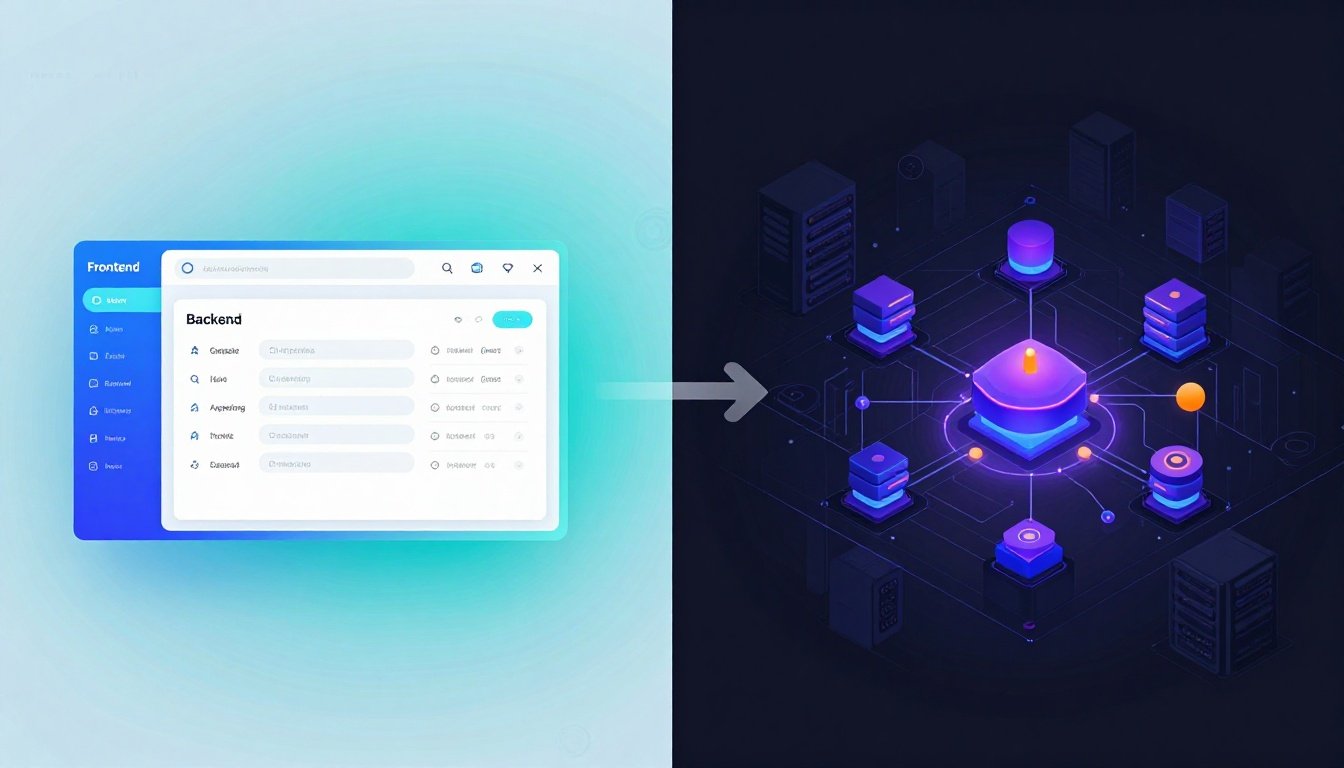
Imagine you're at a busy restaurant. The menu, the friendly server, and the colorful plates you see make up the frontend—everything that catches your eye and feels welcoming. But behind the scenes, the kitchen staff cooks the meal, manages orders, and keeps supplies stocked—that's the backend, hidden yet vital. This split mirrors web development perfectly. As tech jobs grow fast in 2026, knowing frontend from backend helps you pick a path that fits your strengths. Both fields see huge demand, with millions of openings worldwide, so choosing wisely can boost your career from day one.
Section 1: Understanding Frontend Development – The Client-Side Experience
Frontend development shapes what users see and touch on websites or apps. It deals with the visual side, making sure pages load smoothly and look great on phones, tablets, or computers. You create the interface that draws people in, focusing on ease and appeal to keep users coming back.
The Core Pillars of Frontend Stack
These basics form the heart of frontend work. They team up to build pages that work well.
HTML: Structure and Content
HTML sets the bones of a page. It organizes text, images, and links into a clear layout. Without it, nothing holds together, like a frame for a house.
CSS: Styling and Presentation
CSS adds color, fonts, and spacing. Tools like Tailwind CSS or Bootstrap speed things up with ready-made styles. They help create modern looks without starting from scratch each time.
JavaScript: Interactivity and Logic
JavaScript brings pages to life. It handles clicks, animations, and form checks. As the key to dynamic sites, it powers most modern web experiences today.
Together, these tools let you craft user-friendly designs. Mastery here means turning ideas into clickable realities.
Essential Frontend Frameworks and Libraries
Frameworks save time and add power to your code. They handle common tasks so you focus on unique features. In 2026, adoption rates show React leading with over 40% market share, per Stack Overflow surveys.
React vs. Angular vs. Vue.js: Current Market Share and Best-Use Cases
React shines for single-page apps like social feeds, thanks to its speed and huge community. Angular suits big enterprise projects with built-in testing tools. Vue.js offers simplicity for smaller teams, ideal for quick prototypes. Pick based on project size—React for flexibility, Angular for structure.
State Management Tools (e.g., Redux, Zustand)
These keep track of data changes across components. Redux works well for complex apps but adds setup time. Zustand keeps it light and easy, perfect for simpler needs. Using them cuts bugs and improves app flow.
Developers often specialize in one to stand out in job hunts. Learning these boosts your portfolio fast.
Key Responsibilities and Deliverables
Frontend pros spend days tweaking designs and testing interactions. They ensure apps work on all browsers and devices.
Implementing Responsive Design Across Devices
You adjust layouts so sites look sharp on any screen. Media queries in CSS help hide or show elements as needed. This keeps users happy, no matter their gadget.
Optimizing Application Loading Speed (Web Vitals)
Tools like Lighthouse measure metrics such as load time and stability. You minify files and lazy-load images to hit top scores. Faster sites rank higher in searches and cut bounce rates.
Daily work includes collaborating with designers on mockups. You deliver code that not only looks good but performs under pressure, often using version control like Git.
Section 2: Deep Dive into Backend Development – The Server-Side Engine
Backend development runs the show from behind the curtain. It manages data, user logins, and server tasks that keep apps secure and running. Without a strong backend, the frontend falls flat—think of it as the engine under a car's hood.
Backend Languages and Ecosystems
Languages here focus on logic and efficiency. Each fits different needs, from quick scripts to heavy processing.
Popular Choices: Python (Django/Flask), JavaScript (Node.js/Express), Java (Spring), PHP (Laravel), Go
Python with Django handles web apps tied to data analysis, like e-commerce sites. Node.js speeds real-time chats, such as in gaming platforms. Java's Spring builds robust enterprise systems. PHP via Laravel powers content sites like blogs. Go excels in fast, scalable services for cloud apps.
Node.js, for example, lets you use JavaScript on both ends, easing full-stack shifts.
Teams pick based on project demands. Python's readability makes it a top pick for beginners entering backend roles.
Database Management and Architecture
Databases store and fetch info reliably. They decide how data flows in your app.
Relational Databases (PostgreSQL, MySQL) vs. Non-Relational Databases (MongoDB, Redis)
PostgreSQL and MySQL use tables for structured data, like user accounts. They shine in transactions needing accuracy. MongoDB stores flexible documents for varied info, such as social posts. Redis caches quick access items, speeding responses.
Understanding ORMs and Query Optimization
ORMs like SQLAlchemy for Python link code to databases without raw SQL. They cut errors in data pulls. Optimize queries by indexing fields— this drops response times from seconds to milliseconds.
Good design prevents crashes during traffic spikes. You learn to scale as users grow.
Server, Deployment, and API Creation
The backend connects everything through servers and APIs. It serves data to the frontend on request.
Building RESTful and GraphQL APIs
RESTful APIs use standard endpoints for simple gets and posts. GraphQL lets clients request exact data, reducing overload. Both enable smooth frontend talks, like fetching user profiles.
Server Management Concepts (e.g., Cloud Providers like AWS, Azure, Google Cloud)
You deploy code on clouds for uptime. AWS offers tools for auto-scaling servers. Azure integrates with Microsoft stacks. Google Cloud handles big data flows.
Monitoring tools track issues, ensuring 99% availability.
This setup powers apps worldwide. Backend devs often debug late-night outages to keep services alive.
Section 3: Career Trajectory and Skill Gap Analysis
Careers in frontend and backend share tech roots but diverge in focus. Frontend leans creative, backend more analytical. Understanding these gaps guides your training and job search.
Required Skill Sets and Learning Curves
Each path demands unique mindsets. Frontend rewards eye for detail; backend prizes problem-solving.
Frontend Focus: Visual Acuity, Deep CSS Knowledge, Accessibility Standards (WCAG)
You need to spot design flaws and ensure colors contrast for all users. WCAG rules make sites usable for everyone, including those with disabilities. Learning curve starts visual but deepens with JS logic.
Backend Focus: Algorithmic Thinking, Security Protocols, System Design Proficiency
Break down problems into steps, like sorting large datasets. Secure against hacks with encryption and input checks. Design systems that handle thousands of users without breaking.
This path takes longer for logic-heavy tasks but builds strong foundations.
Both require coding practice. Frontend might click faster if you like art; backend suits math fans.
Typical Job Roles and Progression
Roles evolve with experience. Entry-level builds basics; seniors lead teams.
Frontend Roles: UI Developer, Frontend Engineer, Web Specialist
Start as UI developer tweaking layouts. Move to frontend engineer owning app features. At senior levels, web specialists optimize global sites.
Backend Roles: API Developer, Database Administrator, Solutions Architect
Begin as API developer crafting endpoints. Advance to database admin managing data health. Top as solutions architect planning full systems.
Progression includes certifications like AWS for backend or React badges for frontend. Networking at meetups speeds climbs.
Salary Benchmarks and Job Market Demand
Pay reflects skills and location. In 2026, U.S. averages hit $110,000 for mid-level devs, per Glassdoor data.
Frontend jobs grow 15% yearly, driven by mobile apps. Backend sees 20% rise from cloud needs.
Salaries even out at senior spots—$150,000+—but backend edges with DevOps extras. Demand stays high in tech hubs like San Francisco.
For side gigs, check resources on starting freelance work to test markets.
Location matters less with remote options. Specialize where passion lies for long-term gains.
Section 4: The Full-Stack Convergence and Hybrid Roles
Lines blur as devs learn both sides. Full-stack roles combine frontend flair with backend power, offering versatility in a changing field.
What Defines a Full-Stack Developer?
A full-stack dev knows enough of each to build complete apps. They form a T-shape: deep in one area, wide in both.
Tooling that Bridges the Gap (e.g., Next.js, Remix)
Next.js runs React on servers for faster loads. Remix handles forms and data fetches seamlessly. These tools let you code once for full coverage.
This skill set shines in small teams. You handle end-to-end without silos.
When to Choose Specialization vs. Generalization
Your goals decide the route. Startups love jacks-of-all-trades; big firms want experts.
Actionable Tip: For Startups, Full-Stack Skills Are Highly Valued; for Large Enterprises, Deep Specialization in Performance or Security (Backend) Often Commands Higher Rates
In startups, wear many hats to ship products quick. Enterprises pay premiums for backend pros fixing complex issues.
Test by building small projects. If you enjoy user flows, go frontend. Love data puzzles? Stick backend.
Balance based on job trends. Generalists adapt easier early on.
Expert Insights on Future Development Trends
Tech shifts mix the worlds more. Serverless setups cut backend server worries. WebAssembly speeds frontend code like C++.
Analysts from Gartner predict 70% of apps will use hybrid stacks by 2028. AI tools automate routine tasks, freeing time for innovation.
Frontend gets progressive web apps for offline use. Backend leans microservices for scalability.
Stay ahead by following updates. These trends favor adaptable devs.
Conclusion: Making Your Definitive Career Choice
Frontend handles user interactions with style and speed. Backend ensures data stays safe and flows right. Both drive the tech world forward.
Start by trying both—build a simple to-do app with Node.js for full coverage. This hands-on test reveals your fit. Commit to one path after, but keep learning the other for edge.
In 2026's hot job market, frontend and backend skills open doors to exciting roles. Pick what excites you, and watch your career soar.