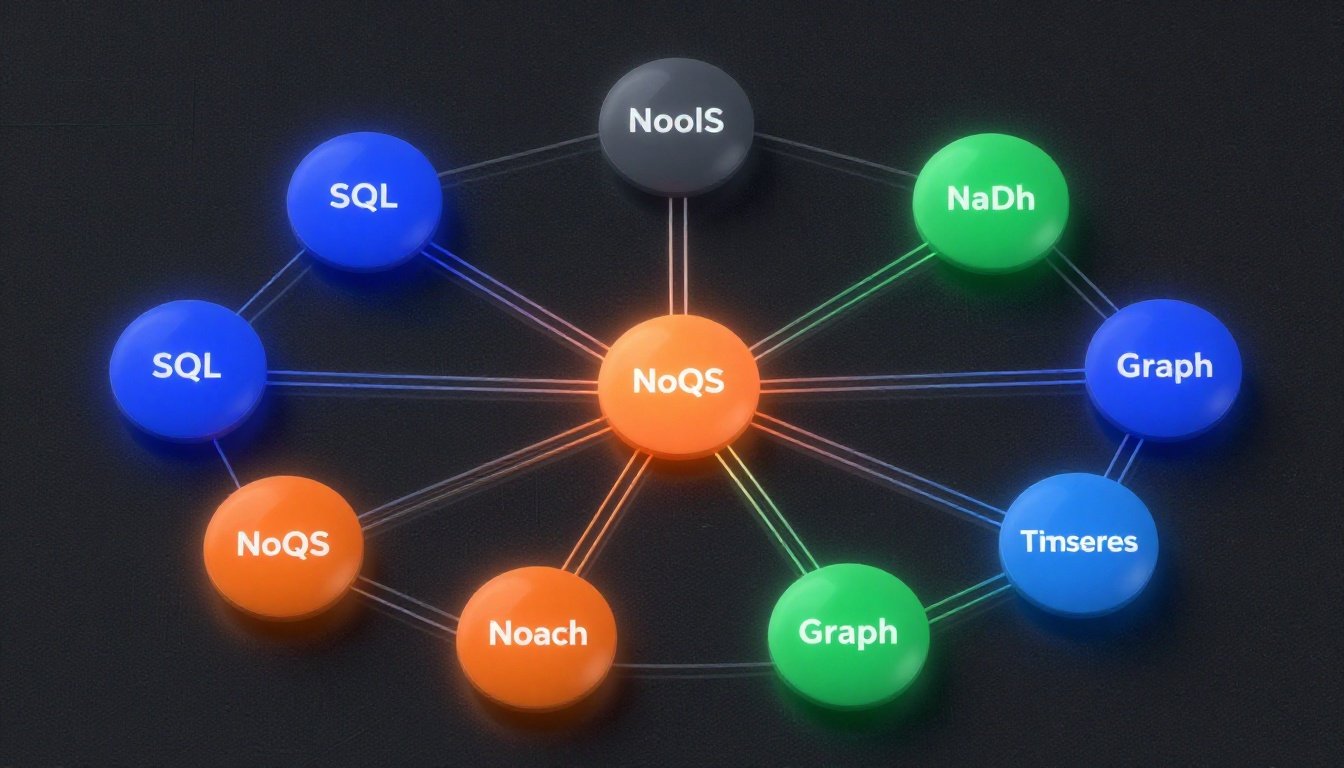
In the world of software today, apps handle huge loads of data at lightning speed. Think about ride-sharing services tracking locations in real time or e-commerce sites managing millions of orders. Modern applications, built on microservices and cloud setups, demand databases that scale fast and adapt to change. You can't stick with old-school setups anymore; they slow you down. The right database choice shapes how well your app performs and grows. It also speeds up your team's work.
Pick the wrong one, and you'll face bottlenecks from day one. That's why polyglot persistence matters—using different databases for different needs. We'll look at relational options, NoSQL types, and specialized tools. By the end, you'll know how to choose the best databases for modern applications like yours.
Section 1: Understanding Modern Database Requirements and Selection Criteria
Performance Metrics: Latency, Throughput, and Scalability Models
Apps today need low latency to keep users happy. Latency means how quick data comes back after a request. Throughput counts how many operations happen per second.
You want high throughput for busy sites. Scalability decides if your database grows up or out. Vertical scaling adds power to one machine; it's simple but hits limits. Horizontal scaling spreads data across servers; it's key for big growth.
Trade-offs come in consistency models. Strong consistency ensures every read sees the latest write, like in banking. Eventual consistency lets reads lag a bit for better speed, common in social feeds. Weigh these based on your app's needs.
Data Structure Flexibility and Schema Evolution
Data in modern apps changes often. Rigid schemas in traditional SQL databases lock you into fixed structures. That works for stable data but slows updates.
Flexible schemas shine in NoSQL. Document stores let you tweak fields without full rebuilds. Key-value types handle simple pairs with ease. This fits agile teams who iterate fast.
Schema evolution affects migration pain. SQL changes can break code if not planned. NoSQL's looseness cuts that hassle, letting you evolve as features roll out. Pick based on how much your data shifts.
Operational Concerns: Cloud-Native Integration and Managed Services
Cloud setups rule now. Databases must play nice with AWS, Azure, or Google Cloud. Cloud-agnostic tools deploy anywhere; others tie deep into one provider.
Managed services cut your workload. They handle backups, patches, and scaling. Amazon RDS or Google Cloud SQL manage the ops so you focus on code.
Costs drop with these options. Pay only for what you use, no idle servers. For startups, this means low entry barriers. Integration perks include auto-scaling during traffic spikes.
Section 2: Relational Databases (SQL): The Evolved Foundation
SQL databases stick around for good reason. They offer reliable structure for core data. Modern versions add features to fit new demands.
PostgreSQL: The Versatile Open-Source Powerhouse
PostgreSQL tops open-source choices. It handles complex queries with ease. JSONB support stores flexible data like documents inside SQL tables.
Geospatial tools let you query maps. Extensibility means custom functions in languages like Python. Companies like Apple and Netflix use it for key backends. They rely on its ACID guarantees for safe transactions.
You get strong performance without vendor lock-in. Community support keeps it fresh. For apps needing both structure and wiggle room, PostgreSQL delivers.
MySQL and Cloud Offerings (e.g., Amazon Aurora)
MySQL powers countless web apps. It's fast for reads and simple joins. Popularity comes from its ease and wide tools.
Cloud versions like Amazon Aurora fix old scaling issues. Aurora spreads data across zones for high availability. It matches MySQL's syntax but adds auto-failover.
WordPress sites and Facebook lean on MySQL variants. They handle traffic surges well. If your app starts web-based, MySQL offers a solid base.
When to Choose SQL: ACID Compliance and Complex Joins
Go for SQL when transactions matter most. ACID means atomic, consistent, isolated, durable operations. Finance apps need this to avoid errors in money moves.
Complex joins link tables efficiently. Inventory systems track stock across warehouses with them. NoSQL struggles here without workarounds.
Stick to SQL for relational data. It ensures data integrity you can trust. Examples include e-commerce checkouts or HR records.
Section 3: The NoSQL Landscape: Choosing Speed Over Strict Structure
NoSQL databases trade some rules for raw speed. They fit apps with varied or massive data. Types include documents, keys, and columns.
Document Databases: MongoDB and Flexibility at Scale
MongoDB stores data as JSON-like documents. Each can have different fields, matching app objects directly. This cuts mapping layers in code.
It scales by sharding across servers. Content sites like Forbes use it for articles. Catalogs in retail apps thrive here too.
Denormalize for speed: embed related data to skip joins. But watch redundancy; it can bloat storage. Use when schema varies, like user profiles with optional fields.
- Pros: Quick development, horizontal scale.
- Cons: Weaker consistency, query limits on deep nests.
- Tip: Index smartly to keep queries fast.
Key-Value Stores: Extreme Speed for Caching and Session Management
Key-value stores like Redis act as super-fast dictionaries. Data sits in memory for sub-millisecond access. Memcached does similar for simpler needs.
Sessions in web apps store user states here. Rate limiting prevents API abuse. Caching cuts database hits on repeated reads.
Stats show Redis hits under 1ms latency often. Twitter uses it for timelines. Pick this for temp data that needs instant pulls.
Wide-Column Stores: Handling Massive Datasets (Cassandra, HBase)
Cassandra spreads data wide for huge writes. It handles petabytes across data centers. No single point fails the whole system.
HBase pairs with Hadoop for big analytics. Netflix relies on Cassandra for user views. They log billions of events daily.
Design for partition keys to distribute load. It favors writes over reads. Use for logs or sensor data in IoT.
Section 4: Specialized Databases for Emerging Workloads
New app types need tailored storage. Graphs link nodes, time-series track changes, vectors power AI.
Graph Databases: Navigating Relationships (Neo4j)
Graphs model connections naturally. Nodes hold data; edges show ties. Social apps map friends this way.
Neo4j uses Cypher for queries. It beats SQL joins on deep relations. Recommendation engines at LinkedIn use graphs to suggest matches.
Queries run fast on traversals. Think fraud detection in banks. Choose graphs when links drive your logic.
Time-Series Databases: Monitoring and IoT Data Ingestion
Time-series data piles up with timestamps. InfluxDB optimizes for this flow. It ingests millions of points per second.
Prometheus monitors clusters in Kubernetes. IoT devices send sensor reads here. Compression saves space on trends.
High write rates suit alerts and dashboards. Grafana pairs well for visuals. Use for metrics that change over time.
Vector Databases: The Rise of AI and Similarity Search
Vectors store embeddings from AI models. They enable semantic searches. Pinecone or Weaviate handle nearest-neighbor finds.
LLMs generate these for text or images. PostgreSQL adds pgvector for hybrid use. E-commerce finds similar products this way.
AI chatbots retrieve context fast. As models grow, vector support becomes standard. Integrate for search beyond keywords.
Section 5: Database Selection Strategy and Best Practices
Choose wisely to avoid rework. Mix types for best results. Plan for growth and security.
Implementing Polyglot Persistence: The Right Tool for the Right Job
One database rarely fits all. Use SQL for accounts, Redis for sessions, MongoDB for catalogs. This matches each job's needs.
Start with core patterns. Prototype queries to test fit. Tools like Kafka help data flow between them.
- User data: PostgreSQL for relations.
- Cache: Redis for quick access.
- Content: MongoDB for variety.
Balance keeps your stack lean.
Serverless Databases and Future-Proofing Architecture
Serverless options scale on demand. DynamoDB from AWS charges per request. No servers to manage.
FaunaDB offers global distribution. Startups love pay-as-you-go for variable loads. It fits event-driven apps.
Future-proof by picking standards. Avoid lock-in with open protocols. Serverless eases ops as teams grow.
Security and Compliance Considerations Across Database Types
Encrypt data at rest and in flight. Use TLS for transfers. IAM controls who accesses what.
For GDPR or HIPAA, audit logs track changes. SQL's row-level security fits sensitive fields. NoSQL needs app-level checks.
Test for vulnerabilities often. Backups secure offsite. Compliance shapes your pick based on data type.
Conclusion: Architecting for Agility and Scale
Database choice sets your app's foundation. It drives speed, reliability, and ease of change. We've covered SQL stalwarts like PostgreSQL, NoSQL speedsters like MongoDB, and specialists for graphs or AI.
Balance ACID needs with BASE flexibility. ACID suits transactions; BASE boosts scale. Modern apps mix both for wins.
Test your data flows early. Prototype to confirm fits. Build agile systems that grow with you. Your next project deserves the right databases from the start.